
water heater services
Hot Water That Keeps Pace With Demand
Water Heater Services in Colorado Springs for properties where recovery time lags, energy costs climb, or existing units approach ten-year replacement timelines
Inconsistent hot water during morning showers or extended waits between dishwasher cycles indicate a water heater that's losing efficiency as sediment accumulates in the tank bottom. Clark Plumbing installs and replaces both tank and tankless systems across Colorado Springs, matching capacity to actual demand rather than defaulting to the same size as the failed unit. A household that's added occupants since the original installation will exhaust a forty-gallon tank quickly, while a downsized household wastes energy maintaining temperature in unused capacity.
Consultation involves calculating peak hourly demand based on simultaneous fixture use, then selecting a tank size or tankless flow rate that meets that load. Tankless units work well when space is limited and usage patterns are spread throughout the day, but they require adequate gas line sizing and combustion air that some installations lack. Tank systems provide a reserve for high-volume periods but cycle more frequently to maintain standby temperature.
Request an installation consultation to compare operating costs and capacity options for your specific usage pattern.
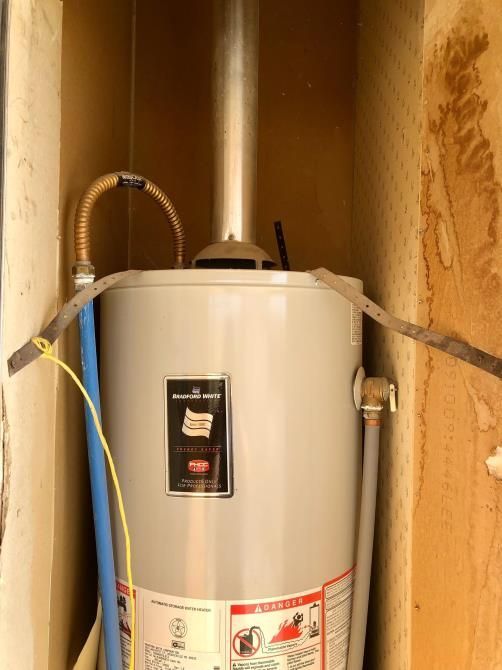
Why Proper Installation Matters for Safety and Longevity
Installation begins with shutting off fuel and water supply, draining the old unit completely, and disconnecting flue venting for gas systems or electrical supply for resistance heaters. New units are positioned to allow clearance for future service access, and all connections follow current code for seismic strapping, temperature and pressure relief valve discharge piping, and combustion air intake. Gas line pressure is tested at the appliance inlet to confirm adequate flow at peak demand.
Once the system is operational, hot water arrives at fixtures in the same time frame as before, but it continues flowing without temperature drops during extended use. Energy costs decrease with newer insulation standards and more efficient burner designs, particularly when upgrading from a fifteen-year-old tank system. The unit maintains consistent output because the heat exchanger isn't clogged with mineral scale that insulates water from the flame.
Residential and commercial installations use different venting categories and fuel input rates, so proper sizing requires knowing peak occupancy and recovery time expectations. Upgrades from older systems often include expansion tank installation to protect against thermal expansion in closed plumbing systems, a code requirement that wasn't enforced when many existing units were installed.
Answers to Frequent Service Questions
Customers considering replacement or new installation often ask about system selection and what changes they'll notice after the work is complete.
What's the functional difference between tank and tankless for a typical household?
Tank systems store heated water for immediate high-volume use, while tankless units heat on demand and work best when draw periods are shorter and spaced throughout the day rather than concentrated in one morning hour.
How does altitude in Colorado Springs affect water heater performance?
Gas-fired units require high-altitude orifice kits and derated input to compensate for thinner air, which affects combustion efficiency, and electric resistance heaters take longer to reach temperature because water boils at a lower temperature.
When is replacement more practical than repairing an existing unit?
Once sediment buildup reduces capacity or the tank shows exterior corrosion near the base, the unit is approaching failure, and investing in repairs rarely extends service life more than a year or two.
What preparation is required before installation day?
Clear access to the existing unit and the installation location, provide space for the old unit to sit after removal, and plan for water shutoff lasting two to four hours depending on system complexity.
What changes immediately after a new water heater is installed?
Water reaches the set temperature faster, maintains that temperature through back-to-back showers, and the system operates quietly without the popping sounds caused by steam bubbles breaking through sediment layers.
Clark Plumbing handles both residential and commercial water heater work, with expertise in system sizing that prevents undersupply or wasted capacity. Schedule a consultation to review energy efficiency options and capacity requirements based on measured usage.